

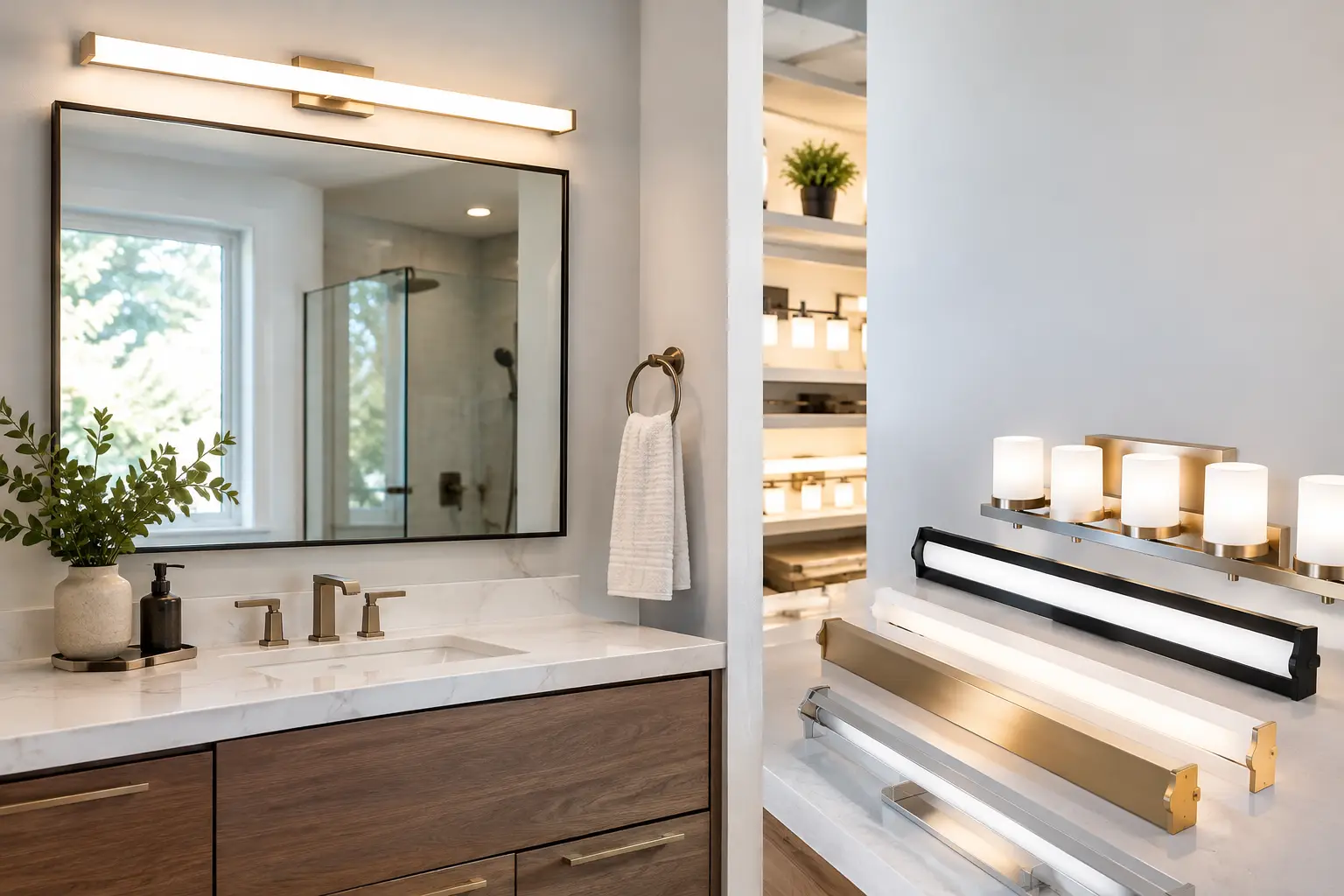
A vanity light is often the fixture guests stand closest to, yet it is frequently specified after the mirror, tile, and millwork are already selected. For designers and project buyers sourcing LED vanity lights wholesale, that timing can create avoidable compromises in scale, color temperature, mounting, and finish. The right fixture should do more than illuminate a mirror. It should reinforce the room’s material palette, support accurate grooming and task lighting, and meet the operating demands of the property.
For a single luxury residence, that may mean choosing a sculptural wall fixture that gives a primary bath a tailored, gallery-like presence. Across a hotel, multifamily development, or senior-living property, the same decision must also account for repeatable specifications, maintenance considerations, approvals, lead times, and procurement consistency. Wholesale sourcing is most effective when the lighting is evaluated as part of the full project rather than as a last decorative layer.
What Trade Buyers Should Expect From LED Vanity Lights Wholesale
A strong wholesale vanity-light program gives buyers more than access to a wide selection of styles. It should provide the range needed to resolve real design conditions: narrow powder rooms, double vanities, high ceilings, large framed mirrors, contemporary guest baths, and public-facing restroom environments. Dimensions, mounting orientation, integrated LED details, finish options, and technical documentation all matter before a fixture reaches the job site.
Integrated LED vanity lights are especially valuable when a project calls for a clean, modern profile. Without a visible replacement bulb, designers can specify slimmer forms and more continuous illumination. Linear bars create a disciplined architectural effect, while vertical fixtures can frame a mirror with balanced side lighting. Decorative LED sconces bring more ornament and visual character, making them a natural fit for boutique hospitality, luxury residences, and powder rooms designed to leave an impression.
The trade-off is serviceability. A replaceable-bulb fixture can be easier for a facilities team to maintain with familiar lamps, while an integrated LED fixture places greater importance on driver quality, rated life, warranty terms, and access for future replacement. Neither option is automatically better. The project’s operating model should guide the choice.
Start With the Mirror, Then Build the Light Plan
The mirror establishes the visual center of a vanity wall. Its width, height, frame depth, and placement should guide fixture selection before decorative preferences take over. A vanity fixture that is too short can feel underscaled above a broad double sink. One that is too wide may compete with a substantial mirror frame or extend beyond the millwork composition.
For horizontal lighting above a mirror, designers often look for a fixture that feels proportionate to the mirror rather than the entire wall. The exact relationship depends on the design intent. A smaller fixture can introduce negative space and restraint, while a longer bar delivers a more architectural, built-in appearance. Vertical sconces at each side of the mirror offer a different advantage: they can reduce shadows across the face and create an elegant symmetry around the focal point.
Mounting height also deserves early coordination. A fixture positioned too high may cast unwanted shadows; one placed too low can create glare or interfere with the mirror’s usable area. Before finalizing a selection, confirm mirror dimensions, junction-box location, backsplash height, faucet reach, and any recessed medicine cabinet requirements. This coordination is especially important in hospitality renovations, where existing electrical locations can limit what is practical without added labor.
Light Quality Is Part of the Luxury Experience
A refined bathroom needs light that feels inviting while remaining useful. Color temperature has a direct effect on the atmosphere. Warmer light can flatter stone, wood, and warm-metal finishes, creating a relaxed residential mood. Neutral white light may better suit task-focused environments or contemporary palettes with crisp tile and polished chrome.
Color rendering should be considered alongside color temperature. In vanity applications, guests and residents need to see skin tones, cosmetics, finishes, and textiles accurately. A visually impressive fixture that produces flat or distorted color is not a premium result. For projects with detailed lighting standards, review lumen output, color rendering requirements, dimming compatibility, and driver specifications with the electrical team before release.
Dimming is not a universal assumption. An LED fixture, dimmer, and driver must be compatible to perform as intended. If the bathroom will be used at varying hours, dimming can add comfort and flexibility. In commercial applications, controls may also be shaped by energy codes, operating procedures, or the property’s broader lighting-control system.
Choose a Finish That Supports the Full Interior Story
Vanity lighting sits within a concentrated field of finishes: faucet trim, mirror framing, cabinet hardware, wallcovering, tile, and accessories. The fixture does not need to match every metal exactly, but it should look intentional. A polished or plated finish can bring brightness to a dark stone wall. Matte black offers graphic contrast and works especially well in contemporary interiors. Gold-toned and warm metallic finishes add softness and decorative richness when paired with natural marble, textured plaster, or warm oak.
For multi-room projects, finish discipline is essential. A fixture that looks exceptional in a showroom may read differently against the project’s actual tile, paint, and mirror samples. Review physical or approved finish samples when the budget and timeline allow, particularly where lighting is repeated across a property. Small variations become far more visible when installed at scale.
Designers may also use vanity lights to connect the bathroom to adjacent spaces. A similar metal finish, crystal detail, or geometric language can carry from the bedroom chandelier to the bath sconces without making the rooms feel identical. This approach creates a more composed guest suite or residence and can simplify purchasing across several categories.
Specify for Installation, Compliance, and Long-Term Use
Luxury does not remove the need for practical documentation. It raises the expectation that the product will perform properly after installation. Commercial and hospitality buyers should verify the fixture’s dimensions, backplate size, mounting method, electrical requirements, wattage, and location suitability before ordering. Wet-location or damp-location considerations may apply depending on the fixture’s placement and local code requirements.
Approval requirements also vary by project, jurisdiction, and customer standards. For contract work, request the appropriate product documentation early, rather than treating compliance as a final submittal task. Bethel International supports trade buyers with lighting selections carrying approvals that may include CUL, UL, CSA, NRTLC, and ETL, subject to the specific product and project requirement.
Durability should be assessed in context. A private powder room may prioritize decorative impact. A high-turnover hotel guest bath may require fixtures that are straightforward to clean, resistant to routine handling, and practical for maintenance teams to service. In senior living and public commercial spaces, glare control, switch placement, and consistent light levels may take priority over more elaborate detailing.
When Custom Vanity Lighting Solves the Better Problem
Catalog fixtures are efficient when the project brief aligns with available dimensions and finishes. Custom manufacturing becomes valuable when the design calls for a specific width, altered mounting configuration, coordinated finish, distinctive diffuser, or a repeatable fixture family that is not available off the shelf.
This is particularly relevant for hospitality and multifamily projects where the bathroom design is a key part of the brand experience. A custom vanity light can echo the silhouette of a lobby pendant, incorporate a signature finish, or resolve an unusually wide mirror wall without resorting to multiple mismatched fixtures. It can also help a retailer or showroom buyer develop a more differentiated assortment.
Custom work requires disciplined planning. Provide drawings, finish direction, target quantities, desired performance, installation details, and required delivery date as early as possible. Prototype review, approvals, production scheduling, and freight all take time. The value is not simply having something exclusive; it is receiving a fixture that belongs to the project and can be produced consistently at the required scale.
A Smarter Buying Approach for Multi-Project Teams
When sourcing LED vanity lighting for more than one project, organize selections around a controlled family of forms and finishes. This preserves flexibility for designers while reducing specification complexity for purchasing teams. For example, a linear contemporary collection may serve standard guest rooms, while a more decorative coordinating sconce is reserved for suites, amenity spaces, or premium residences.
Before placing a wholesale order, confirm quantities by finish, shipping sequence, receiving conditions, and spare-fixture needs. Order accuracy matters because vanity lights are typically installed late in the construction schedule, when substitutions are costly and design changes are disruptive. A clear fixture schedule, approved samples, and early consultant coordination protect both the visual concept and the project timeline.
The best vanity-light specification is not merely the one that photographs well. It is the one that gives the mirror wall a finished presence, supports the way people use the space, and arrives with the clarity needed to install it confidently across every room.