

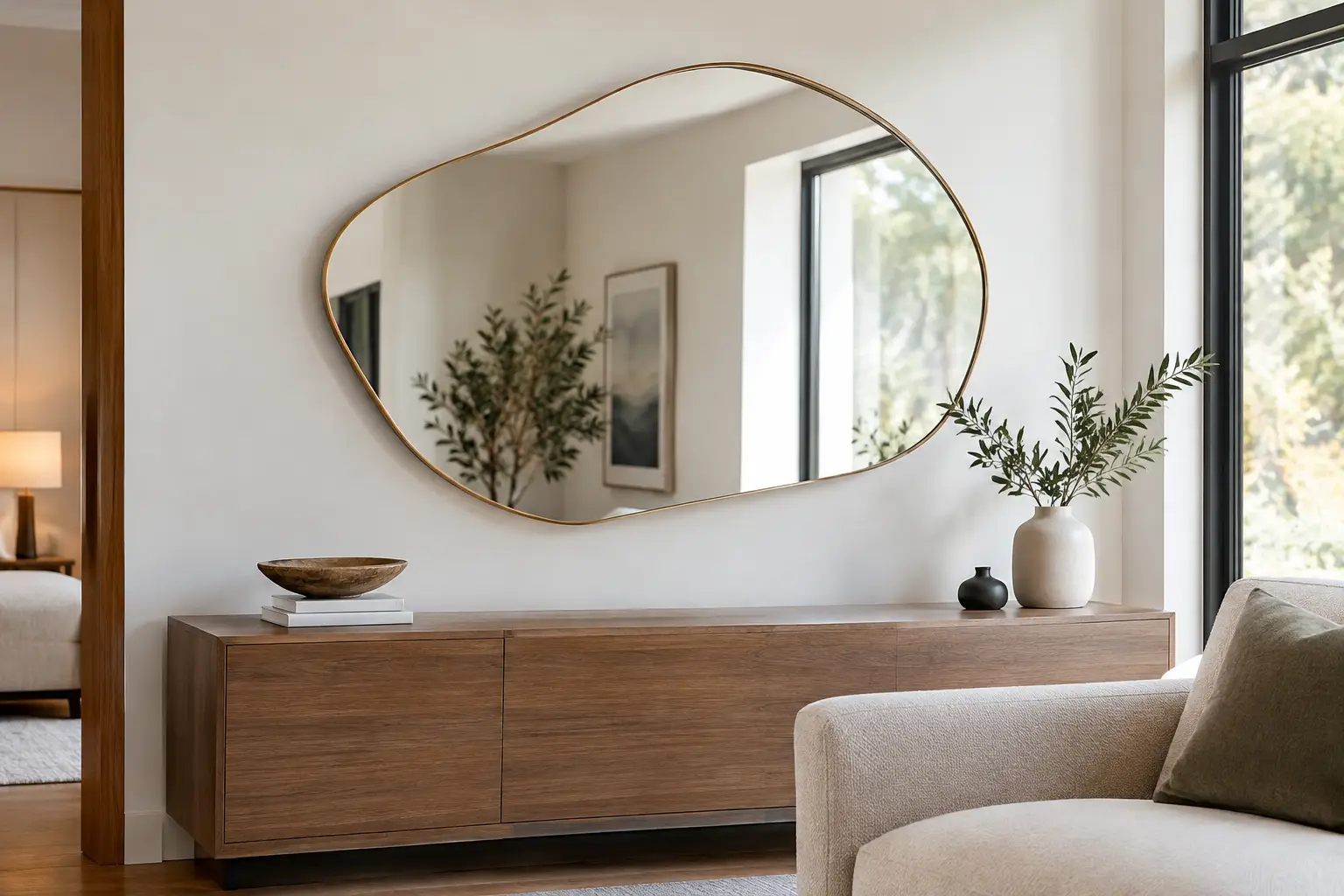
A mirror that is even a few inches too narrow can make a carefully composed wall feel like an afterthought. In a hospitality lobby, model residence, dining room, or luxury bath, custom size decorative mirrors give designers control over the visual proportion that stocked pieces cannot always provide. The result is not simply a larger reflective surface. It is a more intentional relationship between architecture, lighting, furniture, and finish.
For trade and contract projects, that control also has practical value. A made-to-order mirror can address a specific wall condition, coordinate with an established lighting package, and support a repeated design language across multiple rooms or properties. The strongest specifications begin with more than dimensions. They account for the room’s viewing distance, surrounding materials, mounting requirements, and the way light will meet the glass throughout the day.
Start With the Wall, Not the Opening
The common instinct is to size a mirror to the available blank space. That can work in a compact powder room, but it is rarely the best method in a larger or more layered interior. Instead, establish the visual field first: the vanity, console, fireplace surround, bed wall, banquette, or architectural paneling that the mirror is meant to serve.
Above a vanity, a mirror typically looks most resolved when its width relates directly to the fixture below it. A single mirror may align with the vanity width or sit slightly inside its edges, depending on the faucet placement, sconces, and backsplash. For double vanities, two individual mirrors often create a cleaner rhythm and leave room for vertical lighting. One continuous custom mirror can be equally effective when the goal is a more expansive, contemporary presentation.
In public spaces, scale must be read from farther away. A decorative mirror above a reception console may need greater height, a more substantial frame profile, or an oversized arched form to hold its presence against tall ceilings. A small, highly detailed piece can disappear in this setting, while an appropriately scaled custom design becomes an architectural focal point.
Proportion Changes With the Frame
Overall dimensions tell only part of the story. A 48-by-72-inch mirror with a narrow metal edge reads very differently from one with a five-inch wood, crystal, or sculptural frame. The latter has less visible mirror area but more decorative weight.
This distinction matters when matching a mirror to adjacent furnishings. If the room calls for a visually quiet piece that reflects a chandelier or window view, favor a slimmer profile. If the mirror is expected to act as wall art, a deeper, more expressive frame may be the better choice. Neither approach is inherently more luxurious. It depends on whether the project needs reflection, ornament, or a measured balance of both.
Choose a Shape That Supports the Interior
Rectangular mirrors remain essential because they work with most millwork, vanities, and furniture silhouettes. Their familiarity is a benefit on multi-unit residential and hospitality projects where consistency and efficient installation matter. Yet custom sizing allows this classic format to feel tailored rather than generic.
An arch introduces softness above linear furniture and can echo arched doorways, windows, or niche details. Round and oval designs bring a more relaxed counterpoint to rectilinear rooms, particularly above console tables or in dining spaces with rounded seating. Organic silhouettes add movement, but they require discipline. When the room already includes dramatic stone, sculptural lighting, patterned wallcovering, and decorative furniture, an irregular shape can create visual competition rather than distinction.
For commercial applications, repeatability should influence the choice. A complex silhouette may be ideal for a signature lobby or feature suite, while a simplified form is often more practical for guestroom corridors, senior-living residences, or a broad restaurant rollout. A strong specification respects both the design concept and the number of units required.
Coordinate Finish, Frame, and Lighting
Mirrors do not exist apart from their lighting. They multiply it, soften it, or reveal its imperfections. Before finalizing a frame finish, consider what the mirror will reflect: a crystal chandelier, an LED-integrated pendant, a window wall, exposed ceiling elements, or a busy circulation zone.
Warm brass and antique gold frames pair naturally with layered decorative lighting and rich materials such as walnut, veined stone, and velvet. Black, bronze, or dark nickel profiles create definition in contemporary interiors and can connect with hardware, furniture bases, and dark metal lighting. Silver, champagne, and clear crystal accents increase brightness, particularly where daylight is limited.
Finish coordination does not require a perfect match across every metal surface. In fact, a room often feels more considered when it combines complementary finishes with a clear hierarchy. A polished nickel mirror frame can sit comfortably with brass sconces if the surrounding details establish a deliberate mix. What should be avoided is an isolated finish with no visual companion elsewhere in the room.
Lighting placement deserves equal attention. Side-mounted sconces generally provide more even facial illumination at a vanity than a fixture installed directly overhead. If a mirror will sit behind a chandelier or pendant, allow sufficient clearance so the reflected fixture feels intentional rather than cramped. In a lounge or dining environment, position decorative mirrors to capture appealing light and depth, not back-of-house doors, service stations, or harsh exterior glare.
Specify for Installation Conditions
A custom mirror is a finish element, but it also needs a sound installation plan. Early coordination reduces surprises once millwork, tile, and electrical work are complete.
Confirm the finished wall dimensions rather than relying only on design-development drawings. Tile joints, stone tolerances, wallcovering seams, and trim can alter the usable field. For oversized pieces, verify the wall substrate, mounting hardware, and access route to the final location. An elevator cab, stair turn, or narrow corridor can determine whether a large mirror should be delivered in one piece or planned as a multi-panel composition.
In wet areas, the edge treatment and mounting method should suit the environment. In high-traffic hospitality settings, consider how the frame and glass will tolerate routine cleaning, luggage movement, and ongoing maintenance. Public-facing mirrors should be selected with local code requirements and safety glazing needs in mind, especially where breakage risk or occupant safety is a concern.
These details are not secondary to design. They protect the design intent from being compromised during procurement and installation.
When Custom Is Worth the Lead Time
Custom manufacturing is most valuable when a standard size would force an awkward compromise. That may mean a mirror that must align with custom millwork, fill a narrow but tall wall bay, repeat across a series of guestrooms, or carry a finish that supports a complete lighting and furniture package.
It is also useful when the project requires a distinctive visual signature. A frame profile adapted to a restaurant’s brand environment or a hotel’s guestroom concept can create continuity without relying on identical furnishings in every space. For retailers and showroom buyers, custom options can support curated assortments that feel exclusive to their market.
That said, custom is not always the right answer. A stocked mirror may be the wiser choice for a fast-turn renovation, a small quantity requirement, or a project where the design language is already complete with a well-proportioned catalog piece. The decision should weigh lead time, quantity, budget, installation complexity, and the value that a tailored dimension or finish adds to the finished space.
At Bethel International, custom production can help trade clients translate a specific design brief into mirrors that coordinate with broader lighting and furniture selections. For project teams, the most effective process is to share the target dimensions, finish direction, quantity, elevation or reference imagery, installation conditions, and required delivery timing as early as possible.
Build the Specification Before the Purchase Order
A clear mirror specification gives purchasing teams, installers, and designers the same point of reference. Include the overall width and height, shape, frame material and finish, glass type, edge treatment, mounting orientation, quantity, and location within the project. If the mirror is part of a repeated room type, identify any variations separately rather than assuming one designation applies everywhere.
For decorative designs, reference the intended visual orientation as well. An asymmetric frame, veining detail, or hand-applied finish can have a top and bottom that is not obvious from dimensions alone. Final approval samples or production drawings can be particularly valuable for higher-volume hospitality and contract orders, where a small discrepancy becomes more visible when repeated dozens of times.
The best custom size decorative mirrors make a room feel resolved before anyone can explain why. Give the piece its proper place in the design development process, and it can do more than reflect the interior – it can reinforce the scale, light, and character that make the project memorable.