

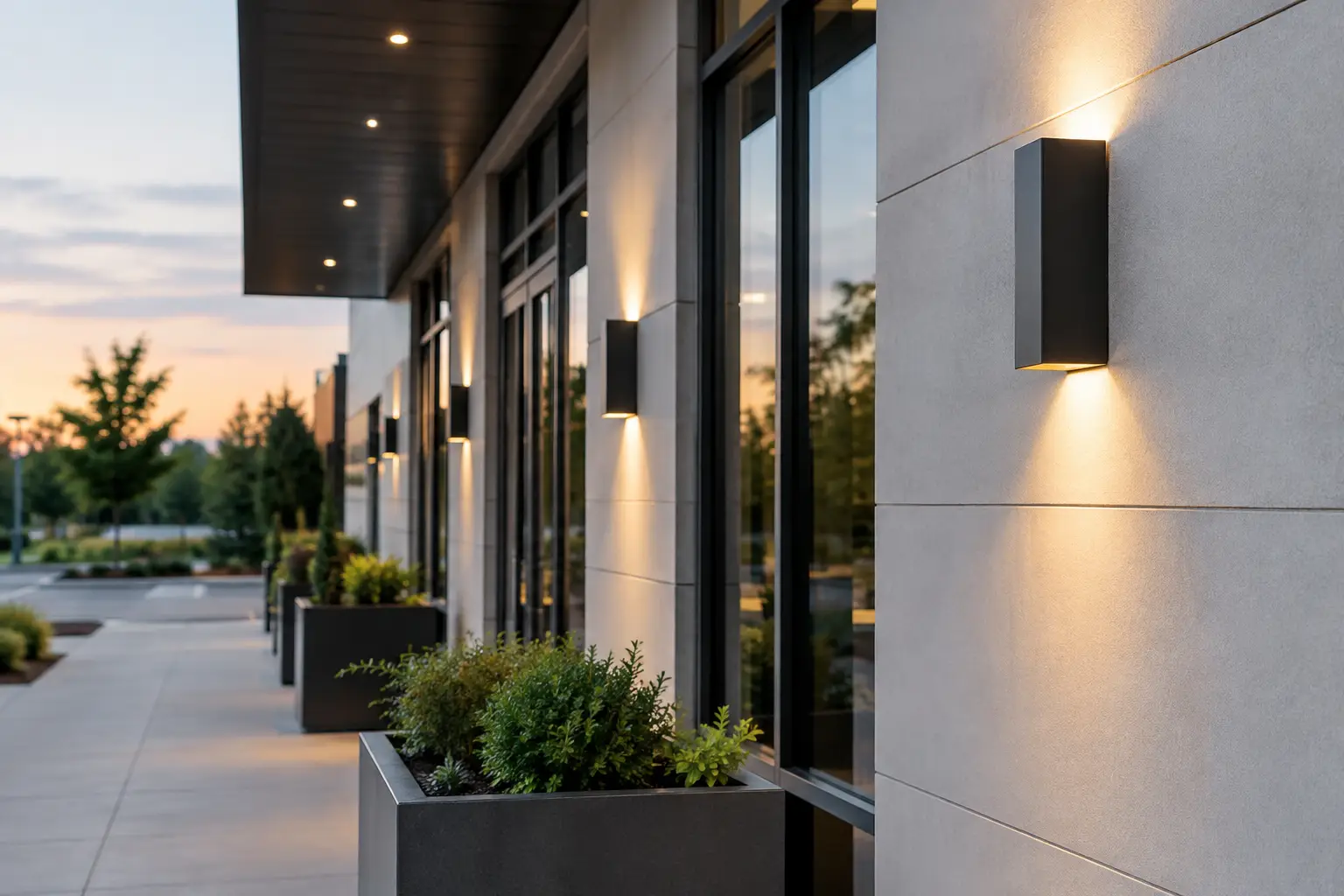
A lobby wall can carry far more visual weight than its square footage suggests. It frames the first impression, guides circulation after dark, and turns an otherwise ordinary elevation into an architectural feature. The phrase commercial wall sconces LED may sound like a simple product search, but for designers and project teams, it represents a layered specification decision involving light quality, mounting conditions, code considerations, finish durability, and the character of the entire interior.
For hospitality, multifamily, workplace, retail, and senior-living projects, the strongest sconce selections do not merely fill a lighting schedule. They reinforce the design concept while supporting comfortable, dependable illumination over years of daily use.
Why Commercial LED Wall Sconces Need a Different Standard
A decorative wall sconce in a private residence may be chosen primarily for proportion and finish. A commercial installation has more demands to meet. Fixtures are often installed in repeated sequences, operated for extended hours, viewed at close range, and exposed to frequent cleaning or high guest traffic. A slight inconsistency in color temperature, a finish that shows wear too soon, or an exposed glare source can become highly visible across a corridor, guest room floor, or restaurant dining room.
LED technology gives commercial teams useful advantages: long service life, reduced maintenance exposure, compact fixture profiles, and the ability to shape light with greater precision. Those advantages only matter when the fixture is appropriate for the application. Decorative appeal and lighting performance should be evaluated together, not in separate conversations.
For example, a crystal-accented sconce may bring needed glamour to a ballroom prefunction area, while a restrained metal-and-glass design may better suit a boutique hotel corridor. Both can be commercially appropriate, provided the output, distribution, mounting, and certification requirements align with the project.
Start With the Layer of Light
Wall sconces perform different roles depending on where they are placed. Defining that role early helps prevent both under-lighting and over-specifying.
Ambient light for corridors and shared spaces
In hallways, elevator lobbies, lounges, and reception areas, sconces often contribute to the ambient layer. Uplight can visually raise a ceiling and create a more open impression. Downlight strengthens wayfinding and gives walls more definition. Fixtures that distribute light in both directions are especially effective when a project needs an even, composed rhythm along a long elevation.
The goal is not necessarily high brightness from each individual fixture. It is a comfortable cumulative effect, coordinated with ceiling fixtures, coves, and daylight conditions. Too much exposed brightness on repeated corridor sconces can make the space feel harsh, particularly in hospitality and senior-living settings.
Decorative light for guest-facing interiors
Restaurants, hotel suites, event venues, model residences, and luxury retail spaces often use wall sconces as decorative focal points. Here, form has a direct influence on perceived value. Sculptural metalwork, clear crystal, textured glass, and refined finishes can establish a sense of permanence that recessed lighting alone cannot provide.
Even when the fixture is primarily decorative, output still deserves attention. A luminous centerpiece can create visual drama without providing enough useful illumination for seating, artwork, or circulation. Layer it with other sources rather than asking one ornamental fixture to do every job.
Task and vanity light where faces matter
Vanity applications require a more exacting approach. Vertical fixtures beside a mirror generally produce more balanced facial illumination than a single overhead source. In hotel bathrooms, residential amenity spaces, and upscale restrooms, color rendering and glare control affect how guests experience the space at close range.
A clean white light can appear crisp, but a warmer temperature often better supports a luxurious, relaxed environment. There is no universal answer. A contemporary medical office, for instance, may call for a different lighting character than a spa-inspired hotel bath.
Specify Performance Before Styling Takes Over
A beautiful fixture that cannot meet the project criteria creates delays later. Before finalizing a finish or silhouette, confirm the specification fundamentals with the electrical plan, lighting schedule, and local requirements.
Color temperature is among the first decisions. Many hospitality and residential-adjacent commercial interiors favor warm white light, often around 2700K to 3000K, for a welcoming appearance. Offices, retail displays, and service environments may use 3000K to 3500K when a cleaner, more energetic presentation is desired. Consistency across adjacent fixture families is essential. A 3000K wall sconce paired with substantially warmer decorative pendants can make an otherwise carefully designed room feel visually disconnected.
Color rendering also matters. High-quality LED sources help finishes, artwork, furnishings, and skin tones read naturally. This is particularly valuable when a project relies on rich woods, layered textiles, polished metals, or detailed wallcoverings.
Dimming should be decided early, not treated as an afterthought. Confirm the intended control method and driver compatibility before purchase, especially on projects using centralized controls, guest-room systems, or phased installation schedules. A fixture may be dimmable in principle while still requiring a compatible control setup to perform properly.
Integrated LED designs offer a clean profile and can give designers greater freedom with slim, contemporary forms. LED-compatible sconces with replaceable lamps offer a different advantage: future source replacement can be straightforward when maintenance teams prefer standardized lamps. The appropriate choice depends on the maintenance model, design intent, and expected life cycle of the property.
Scale, Placement, and Visual Rhythm
Commercial wall sconces are often specified in multiples, making scale more consequential than it may appear on a single product image. A compact fixture can disappear on a tall lobby wall, while an oversized statement piece can crowd a narrow corridor. Review height, projection, width, and illuminated surface area in the context of elevations, furniture plans, and ceiling heights.
Mounting height should support both appearance and function. In circulation areas, fixtures must sit high enough to avoid interference while maintaining a consistent visual line. In guest rooms, bedside sconces need to coordinate with headboard height, switching locations, reading comfort, and furniture clearances. In vanity applications, mounting dimensions should support even illumination around the mirror rather than creating shadows under the eyes or chin.
Projection requires special care in tight circulation zones. Designers should coordinate the fixture body, shade, decorative elements, and any required clearances with code and accessibility considerations. A dramatic silhouette can work beautifully in a generous lobby but may be impractical along a constrained passage.
Finish Selection Is a Long-Term Design Decision
Finish selection should reflect more than the color palette. It should account for the level of use, cleaning practices, and visual longevity expected from the space. Brushed brass can bring warmth to a hospitality scheme. Polished chrome may reinforce a crisp, contemporary bath. Matte black offers contrast and architectural clarity, while nickel tones can bridge traditional and modern furnishing programs.
In repeated installations, finish consistency becomes part of quality control. Ordering from a knowledgeable supplier with established production standards helps project teams maintain a coordinated result across rooms, floors, or properties. When a concept calls for a distinctive scale, finish, crystal treatment, or fixture variation, custom manufacturing can be a practical path rather than a compromise.
Bethel International supports commercial and hospitality buyers with a broad lighting assortment and custom project capabilities, helping teams coordinate decorative lighting with furniture, mirrors, and accessories across a complete interior concept.
A Practical Review Before Release
Before releasing an order for commercial LED wall sconces, project teams should verify five essentials:
- The fixture’s dimensions, projection, and mounting height work with the final elevation and circulation clearances.
- Light output, color temperature, and distribution support the fixture’s intended role in the overall lighting plan.
- The selected dimming and control approach is compatible with the fixture’s LED system.
- Required listing, certification, and project documentation are confirmed for the installation.
- Finish, lead time, quantities, and any custom details are aligned before the project moves into procurement.
This review is especially valuable when a fixture appears across multiple room types. A sconce that works in a lobby may need a different output, mounting height, or finish treatment in guest corridors and suites.
Design for the Experience, Not the Fixture Alone
The most successful commercial wall sconce specification considers what a person sees and feels while moving through the space. It considers the pool of light on textured plaster, the glint of crystal in a lounge, the welcoming glow outside a guest room, and the confidence of a well-lit mirror. Those moments create the finished experience clients remember.
Choose fixtures with enough presence to support the design story, enough performance to serve the space, and enough project support to make procurement dependable. When those priorities align, wall lighting becomes more than an item on a schedule – it becomes part of the property’s signature.